

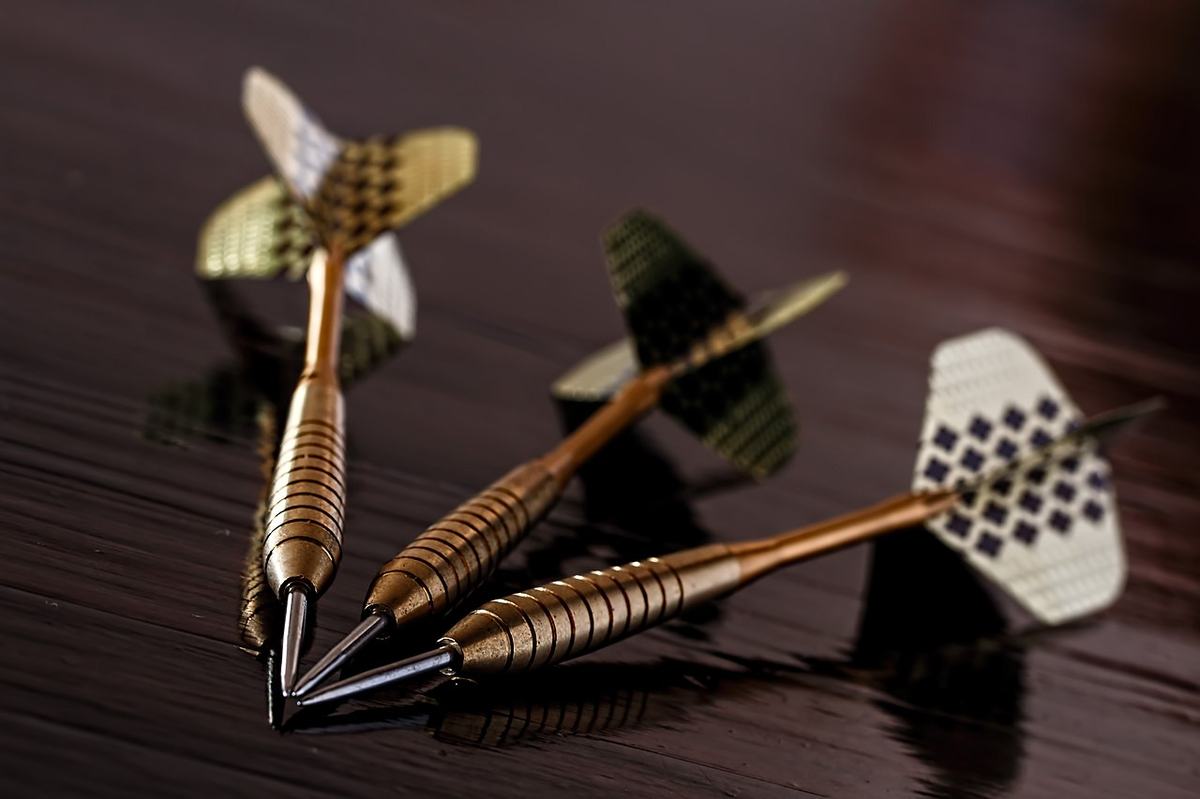
Darts was likely born in medieval England—originally as miniature spears thrown out of boredom at tree trunks or the bottom of empty wine barrels. In those days, nobody had heard of aerodynamics; flight stability was a matter of pure luck or the exceptionally steady hand of a weary archer. The real breakthrough came in the 20th century when players realized that adding flights transformed a primitive projectile into a precision instrument, allowing for a level of consistency that knights could only dream of.
Today, in 2026, darts has long since left the smoky haze of English pubs to become a multi-million dollar sport and an arena for a technological arms race. A modern dart is not just a piece of wood, but a sophisticated piece of equipment. Designers today are more likely to consult aerospace engineering manuals than barroom anecdotes. From tungsten barrels with densities rivaling armor-piercing rounds to flight systems made of space-age polymers—today’s gear is a technological masterpiece. These details determine whether your dart lands exactly where you’re looking, or if you’re left feeling like the equipment won out over your ambition once again.
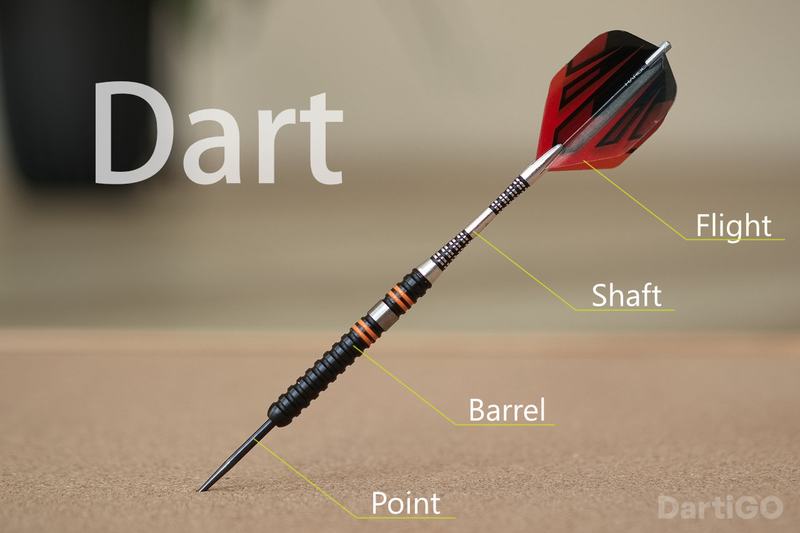
Every dart, regardless of the model, consists of four primary components.
The Point
This is the thin tip that embeds itself into the board. Points can be steel or soft (plastic). The rule is simple: soft tips are used exclusively for electronic boards, while steel points are for sisal (bristle) boards only.
Steel points are incomparably more durable and precise. Once you move past the stage of hitting the wall or the floor, a light sharpening every few thousand throws is enough to keep them in peak form. In most sets, points are pressed into the barrel, but some models allow for interchangeable points to suit your preference. Soft tips are lighter and safer but wear out, bend, and snap much faster. Quality varies significantly—after a few tries, you’ll surely find a brand that doesn't need changing every two throws.
The Barrel
This is the most critical part of the dart—the part you actually grip, the heart of the dart, and its main source of weight. They are most commonly made of brass or, in professional models, tungsten.
- Brass: Inexpensive and bulky. Eventually, this becomes a hindrance as your grouping improves and you try to fit three darts into a tiny scoring bed.
- Tungsten: Allows for a slim yet heavy barrel. Alloys typically range from 70% to 95% tungsten. However, keep in mind that tungsten is brittle; darts with over 97% tungsten content can actually crack if they take an unlucky bounce onto a hard floor.
Barrels come in various shapes: straight barrels are the most popular, but there are also torpedo/bomb styles (front-weighted)—ideal for players who "push" the dart. Scalloped models with a distinct notch are also popular, acting as mechanical memory for your fingers. Equally important is the grip (knurling/cuts). It’s not just for show. Some prefer classic rings, while others go for aggressive shark grips that practically stick to the skin.
The Shaft (Stem)
The shaft connects the barrel to the flight. They come in various lengths and materials. Nylon or polycarbonate are the most common—cheap and light, but prone to snapping during a "Robin Hood" (when one dart lands inside the shaft of another). Aluminum stems are more durable but have a downside: they can bend, which kills flight stability. The "gold standard" (and most expensive) are carbon and titanium.
The length of the shaft affects stability:
- Short: Moves the center of gravity forward. The dart flies faster and more aggressively.
- Medium
The Flight
This is responsible for aerodynamics. The Standard shape (No. 2 and No. 6) is an absolute classic—the larger surface area is more forgiving and straightens the flight path. Slim flights are narrow, designed for players with a very hard, direct throw. There are also hybrid shapes like Pear or Kite. The optimal thickness is 100 microns—it offers the best compromise between weight and durability. And most importantly: colors and designs. Because in darts, it’s not just about technique; it’s about style!
Innovations: Integrated Systems and "Spinners"
Integrated systems like Condor Axe or Target K-Flex are becoming the standard for ambitious amateurs. Here, the shaft and flight are a single molded piece of flexible polymer. Forget about flights popping off! Another interesting feature is Spinning Shafts. The top portion rotates when struck by another dart, drastically reducing deflections and allowing for tighter grouping when chasing that 180.
Accessories – Small Things, Big Difference
- O-rings: Rubber washers for the shaft threads. Tighten them once and forget about your stems rattling loose.
- Trident 180: Plastic cones that fit over the points. They eliminate the "lip" between the point and the barrel, protecting your flights from getting shredded.
- Flight Punch: Creates a slot in the flight for a slot-lock ring. This ensures the flight stays on the shaft with a vice-like grip.
- Case: Essential for ensuring your favorite darts aren't rattling around in your bag and getting damaged during transport.
Summary
You might get the impression that modern darts is more of a physics lab than a pub sport. When you're choosing between a titanium shaft and a 100-micron flight, it’s easy to forget the most important thing: the pure joy of hitting the target. The truth is, even the most expensive setup won't make you a world champion overnight. However, your equipment shouldn't get in your way—it should become an extension of your arm that you can rely on when the pressure of the final double starts to kick in.
Finding the perfect setup is, for many players, a game within the game. Testing new shapes teaches humility toward aerodynamics but also helps you understand your own throw. Don't be afraid to experiment, but once you find "the one"—stick with it. Darts is 90% consistency and 10% knowing your flight isn't going to fall off mid-air.
My advice: Before you dive into buying the next "magic" gadget, get the basics right. Good board lighting (ideally an LED ring) and a solid mat are investments just as important as the darts themselves. Remember: a pro can hit a triple twenty with a common nail, but an amateur needs equipment that will forgive those few millimeters of a miss.